Portal Space Systems, a startup founded by a key engineer behind SpaceX's most powerful rocket engine, has secured $50 million in Series A funding to develop a new high-powered propulsion system for spacecraft. The company, valued at $250 million, plans to launch a working prototype of its "SuperNova" spacecraft in 2027.
The funding round was led by Geodesic Capital and Mach33, with participation from Booz Allen Ventures, ARK Invest, AlleyCorp, and FUSE. The company has also received $45 million in strategic funding from the U.S. military, adding to $67.5 million in prior private investment.
From Government Labs to Commercial Orbit
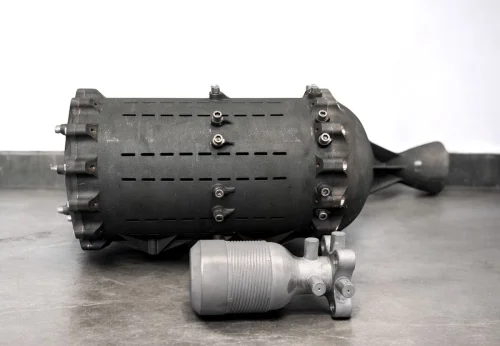
Portal is developing solar thermal propulsion, a technology studied by NASA and government research labs since the 1960s but never deployed in orbit. The system concentrates solar heat to warm a propellant, creating thrust that is more powerful than current electric thrusters but avoids the chemical fuel of traditional rockets.
Founder and CEO Jeff Thornburg began his career in the U.S. Air Force working on advanced rocket engine concepts. He was later recruited by Elon Musk to SpaceX, where he helped develop the Raptor engine for the Starship rocket. After roles at Stratolaunch and Amazon's Project Kuiper, he co-founded Portal in 2021 with Ian Vorbach and Prashaanth Ravindran to commercialise the shelved solar thermal concept.
A New Calculus for Space Mobility
"It’s no longer acceptable to move slowly on orbit," Thornburg told TechCrunch. "China’s running circles around our spacecraft. We need equivalent capability."
A 2003 NASA-commissioned report concluded the technology offered better performance but was not pursued due to limited demand for in-space mobility. Today, with thousands of satellites launched annually and the U.S. military seeking agile spacecraft for surveillance, the demand has shifted dramatically.
Travis Bales, Managing Director of Booz Allen Ventures, confirmed the military's interest stems from the technology's potential application in orbital warfare.
The Path to a 'Fighter Jet for Orbit'
Portal's first spacecraft, dubbed a "fighter jet for orbit" by Thornburg, is the SuperNova. The company's flight electronics completed a test launch last week, with another prototype expected in October 2026. The full SuperNova demonstration is slated for 2027.
The company's "Hex" thruster, a combined solar concentrator and nozzle, benefits from recent advances in additive manufacturing and materials science. Aaron Burnett, CEO of Mach33, envisions Portal becoming a "space mobility prime," providing propulsion services for various satellite operators needing to manoeuvre in a crowded orbital environment.
A Stepping Stone to Nuclear Propulsion
While some advocate for nuclear thermal rockets for deep space travel, Thornburg argues Portal's technology offers a practical near-term path. A solar thermal system shares core engineering principles with a nuclear thermal one, essentially replacing the sun's heat with a reactor's.
"I’ll be able to help mature this technology much faster on orbit than we ever will by trying to build a $2 billion ground test facility that’s nuclear safe," Thornburg said, positioning Portal's work as a foundational step for future government-led nuclear propulsion programs.