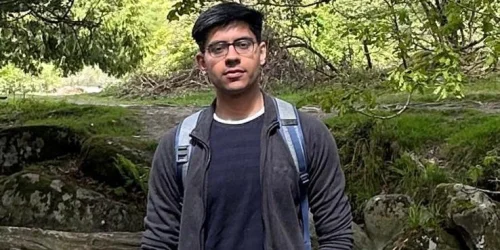
A 24-year-old software engineer in Dublin says the rapid integration of artificial intelligence into his workflow has fundamentally changed his job, transitioning him from a code-focused junior developer to a strategic "mini business owner." Maahir Sharma, who works in a division building internal AI tools, detailed his experience in an interview verified by Business Insider.
Sharma, who began coding in the fifth grade, stated that his role 18 months ago involved using AI for minor bug fixes. Today, he leverages it to ship complete production features, treating the technology as a "junior-level engineer" with whom he must collaborate. This shift initially felt like a loss, he admitted, but has redefined his understanding of the profession.
From Code Execution to Product Strategy
"The job was never about writing code," Sharma asserted, reflecting on his transition from junior to senior engineering responsibilities. He explained that his original function was to receive scoped requirements, write the code, and ship the feature. Now, he focuses on understanding the product, customer desires, and the end-to-end business ecosystem before building anything.
This new approach means he no longer receives clearly defined tasks with the sole goal of shipping code. "I feel like a mini business owner and product engineer," he said, noting this change has provided insight into how startups and entrepreneurship operate.
A New, Iterative Workflow with AI
Sharma's current methodology involves breaking down problems into sub-problems and using an AI-assisted coding tool to generate a three-step plan. He first prompts the AI to ask clarifying questions and map out dependencies and desired features for the final product.
He iterates on the initial prompt roughly eight or nine times to arrive at a comprehensive plan considering all technical decisions, optimisations, and trade-offs before requesting the final code generation. "Then sub-agents start working on various features, and I closely monitor all the code being generated and review it line by line, correcting it if it starts to deviate. I think that's the most important part," Sharma emphasised.
Critical Oversight and Upskilling
The final step in his process involves instructing the AI to run extensive tests and scan the codebase for obvious security vulnerabilities—a step he says many overlook. He cautions that AI can sometimes "over-engineer" problems by adding unnecessary infrastructure components, requiring human judgment to seek simpler solutions.
To stay relevant, Sharma spends approximately 20 hours per week upskilling through online courses and experimenting with new tools, enrolled in multiple external programmes. "This industry is transitioning to an AI engineering industry. People want intelligent workflows, and I think that's something you need to keep up with," he stated.
Development of Crucial Soft Skills
The transformation has also necessitated a sharp improvement in his soft skills. Sharma now employs the STAR (Situation, Task, Action, Result) format when communicating with stakeholders to ensure clarity. He conducts his own market research before building features and has learned to effectively communicate technical concepts to non-technical audiences—a skill he lacked six months ago.
Despite the seismic shift in his daily work, Sharma remains optimistic about his job prospects for the next five to 10 years, confident that focusing on product strategy and intelligent collaboration with AI is "the right thing."