A sudden war in Iran and a partial US government shutdown have thrown the American economy into turmoil, causing travel chaos, rising prices, and renewed fears of a recession in what was projected to be a boom year. The dual crises have scrambled mortgage rates, inflation forecasts, and job market prospects, forcing households and businesses to reconsider their plans for 2026.
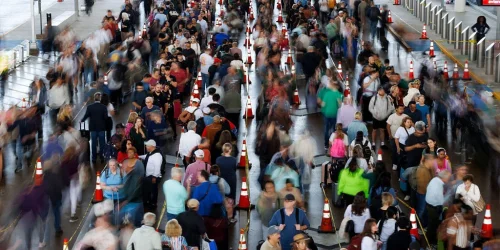
The immediate impact is being felt most acutely by travellers. Security lines at major airports have stretched for hours, with the Department of Homeland Security's plan to resume paying TSA agents expected to take months to normalise operations. Simultaneously, spiking oil prices due to the Middle East conflict are driving up costs for flights, shipping, and consumer goods.
Economic Optimism Reversed
This one-two punch has forced a stark reassessment of the US economic outlook. The Federal Reserve has backpedalled on recent optimism and is likely to hold interest rates steady in April to combat inflation. The Organisation for Economic Co-operation and Development now expects US inflation to average 4.2% this year, nearly double the 2.4% annualised growth recorded in February.
"Americans may have no choice but to tighten their belts," the report notes, warning that costs for food, electricity, and other essentials could climb further if the war persists.
Mortgages, Jobs and Wall Street Jitters
The ripple effects are widespread. In anticipation of hotter price growth, the steady decline in the 30-year fixed mortgage rate has reversed, climbing again and cooling the housing market. The job market, already in a low-hire "Great Freeze," shows no sign of relief, with the latest jobs report revealing shocking losses across white- and blue-collar sectors.
On Wall Street, March has spurred whispers of a potential recession. Analysts at Pantheon Macroeconomics estimate household wealth could dip by as much as $1.5 trillion this quarter due to market volatility, prompting decreased consumer spending. A major consumer confidence indicator has fallen to its lowest level since December.
A Nation of Frustrated Travellers
For ordinary Americans, the crisis is manifesting in logistical nightmares. Mickey Lyons, 53, from Detroit, is considering a 12-hour train ride to Canada to avoid airport chaos. "I can't believe I'm saying this," she said.
Other travellers recount similar ordeals. Bazela Malik, a Florida-based accountant, described a 24-hour journey from LaGuardia to Fort Lauderdale involving two missed flights and expensive Ubers. Copywriter Megan Walsh from New York City waited in a four-hour, serpentine security line after a trip to New Orleans. "It was like that game, 'Snake?'" Walsh said. "The line was eating itself."
While the DHS payment plan may eventually shorten security queues, economists warn the broader cost hikes and economic uncertainty are likely to define the spring and summer. For those planning travel, switching jobs, or buying a home, 2026 has taken a significant and unwelcome detour.