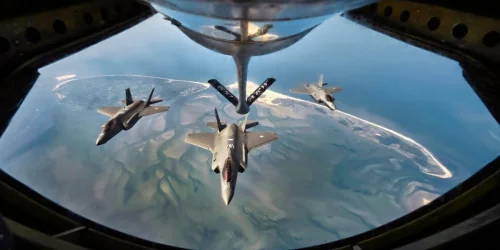
Imagine buying a car that costs more to maintain over its lifetime than to build in the first place. Now imagine that car is a fighter jet, and the bill is $2.1 trillion. That’s the price tag for Lockheed Martin’s F-35 program, the most expensive weapons system in history. But here’s the kicker: the jet itself isn’t the most costly part.
The F-35 is a marvel of modern engineering—a stealth fighter that can replace multiple aircraft and dodge radar. But its jaw-dropping cost isn’t just about the tech. It’s about something far more mundane: spare parts and repairs.
The Hidden Trillion-Dollar Monster
According to a 2024 Government Accountability Office (GAO) report, 75% of the F-35 program’s total cost comes after the jet rolls off the assembly line. That’s right—sustainment, the cost of keeping the fleet flying for decades, is the real budget-buster. In 2023 alone, sustainment estimates jumped from $1.1 trillion to $1.58 trillion.
“Because sustainment stretches over decades, the need for parts—and the logistics systems to deliver them—compounds over time,” explains Paul Saunier, a retired Lockheed Martin engineer. Each aircraft now costs $4.1 million annually just to maintain, far above original targets.
Why Parts Cost a Fortune
Unlike your iPhone, you can’t just order F-35 parts from China. US law requires prioritizing American-made items, and national security locks the supply chain to a handful of authorized suppliers. That means higher labor costs, worker shortages, and no cheap overseas alternatives. The result? Expensive components that push the price sky-high.
Scale also plays a role. The F-35 fleet is 25 times larger than the F-15EX program, and its three variants mean more parts to stock. Lockheed Martin delivers 150 jets annually, while competitors produce just a few dozen. More jets equals more maintenance, equals more cost.
The Right-to-Repair Battle
Here’s the twist: the US military can’t even fix its own jets without Lockheed’s permission. The company owns key intellectual property for the F-35, forcing the government to rely on contractors for software diagnostics and engine repairs. “The last thing our troops should be doing is waiting around for contractors who charge more for slower repairs,” says US Army veteran and Congressman Pat Ryan.
In July 2025, Senators Elizabeth Warren and Tim Sheehy introduced the Warrior Right to Repair Act, aiming to give the military access to weapons systems data. But even if passed, it won’t solve everything. The US lacks the in-house capacity to manufacture advanced jet engines, relying on specialized firms like Pratt & Whitney.
A Legacy of Skyrocketing Costs
The F-35’s price reflects a broader shift in US defense. During WWII, a B-17 bomber cost just $200,000 (about $3.5 million today). Factories like Henry Ford’s Willow Run churned out one bomber per hour. Today, it takes 18 months to produce a single F-35.
As the Cold War ended, the US defense industry consolidated from 51 major contractors to just five. “You might imagine that this leaves the government in a position of little leverage,” says Shelby Oakley, a GAO director. Near-monopolies over bombers, submarines, and missiles drive costs up.
The debate isn’t just about how much the US spends, but how that money translates into long-term value. For taxpayers and service members, the F-35 is a lesson in the hidden price of cutting-edge technology.