Imagine watching millions vanish in a single month. For the elite 'Tiger Cub' hedge funds, born from a legendary Wall Street dynasty, March 2026 wasn't just a bad month—it was a financial nightmare. Why did these masters of the market, the protégés of billionaires, suddenly stumble so badly? The answer reveals a vulnerability no investor saw coming.
New investor updates, seen by Business Insider, show a network of funds connected to Julian Robertson's Tiger Management haemorrhaging money. From seasoned giants to hot new launches, almost no one was spared. This isn't just a story of rich people losing money; it's a warning sign for the entire market about what happens when volatility strikes at the heart of high finance.
The Old Guard Stumbles: Billion-Dollar Losses Hit Industry Titans
The pain was widespread. Long-running funds like Coatue and Tiger Global fell 3.5% and a staggering **10.5% respectively in the first quarter**. But the real story is in the next generation—the former stars who left these giants to start their own firms, promising even greater returns.
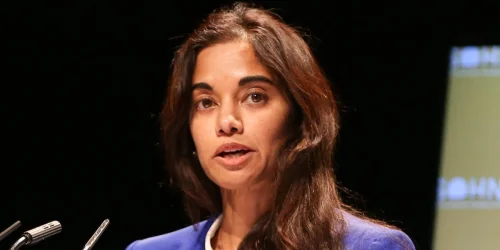
Take Mala Gaonkar's SurgoCap Partners, now managing over **$6 billion**. After a brutal 6.5% loss in March, the fund was down 4.4% for the quarter. Gaonkar, a former portfolio manager at Stephen Mandel Jr.'s Lone Pine, exemplifies how the turmoil reached the very top of the talent tree.
Former Viking Stars Face a Brutal Reality Check
For the wunderkinds who struck out on their own, the first quarter of 2026 was a harsh lesson. Ning Jin, the former chief investment officer of Viking Global, saw his new firm, Avantyr Capital Partners, lose 2% in March. Yet, in a telling twist, he still **outperformed his old firm**, which fell 4.1%.
The losses were far steeper for other Viking alumni. Divya Nettimi's Avala Global saw one share class plummet **10.2% in March alone**, dragging its yearly loss to 7.6%. Another class without private investments fared worse, down a shocking 14.6% for the month.
"It was a perfect storm," one source close to the managers suggested, pointing to the market chaos. Grant Wonders' Voyager Global lost 3.1% in March, capping a disastrous quarter where the fund was down nearly **17% overall**.
Why This Market Meltdown Was Different
This wasn't just a typical dip. The average hedge fund lost 3.5% in March, with stock-pickers down 2.8%. The volatility, ignited by the US-Iran conflict, even rattled the normally steady multistrategy funds. While the S&P 500 recovered some ground by quarter's end, the damage to these concentrated, growth-focused funds was already severe.
For everyday investors, this saga is a crucial insight. It shows that even the most celebrated and connected fund managers, with all their resources, are not immune to systemic shocks. Their heavy bets on technology and growth stocks, once a guaranteed path to riches, became their Achilles' heel overnight.
The question now is what they do next. Will this quarter force a fundamental change in strategy for the Tiger Cub network, or was it merely a blip in their relentless pursuit of alpha? One thing is clear: the aura of invincibility has cracked.