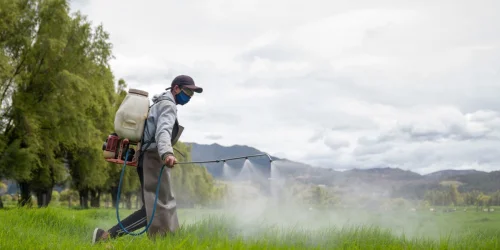
Imagine being diagnosed with a cancer your grandparents were told to watch for. That's the unsettling reality for a growing number of young adults worldwide, as cases of colorectal cancer in people under 50 continue their mysterious, decades-long climb. Now, a groundbreaking new study has uncovered a potential environmental trigger hiding in plain sight—and it's a common weed killer.
Published in the prestigious journal *Nature Medicine*, the research suggests a herbicide called **picloram** could be linked to this alarming trend. The study's senior author, computational biologist Jose Seoane, told Business Insider his team was so surprised by the finding they initially thought it was a mistake. "When we saw picloram, we were like, okay, this has to be a mistake," he said.
How a Chemical "Fingerprint" Points to a Killer
The scientists weren't looking for a specific chemical. Instead, they hunted for unique "fingerprints" left on the DNA inside colorectal cancer tumours. Our lifetime exposures—to chemicals, diets, pollutants—can leave these tell-tale marks, known as DNA methylation signatures, which control how our genes switch on and off.
In tumours from younger patients, they found a distinct signature. And when they traced it back, it pointed squarely to exposures including picloram. "We haven't seen anything" else to explain the results, Seoane admitted. To confirm the pattern, they then compared young cancer rates in seven US states to county-wide pesticide data. The result? The strongest link of all was to picloram.
From Vietnam War Forests to Your Food Chain?
This isn't a new chemical. Picloram was developed in the 1960s and was even part of the herbicide "agents" used by the US military to clear forests during the Vietnam War. It works by disrupting plant hormones and can persist in soil for years.
But here's the crucial caveat: this study is observational. It can't *prove* picloram causes cancer. More work is urgently needed, especially testing tumours from young patients in high-use areas. "It could be that where you live or what you work with could be more associated with the risk," Seoane said.
Experts not involved in the study agree it's a vital, if preliminary, clue. Cancer epidemiologist Rebecca Siegel called it "an important step forward in the exploration of newer exposures that may be contributing to the rise."
The Complex Web Behind a Modern Epidemic
Researchers have been racing to solve this puzzle for over thirty years. The trend is so concerning that in 2021, the US lowered the recommended age for first colonoscopy screening from 50 to 45. Experts believe a "perfect storm" of modern lifestyle factors is to blame.
This picloram clue joins other potential suspects, like a link to certain gut bacteria infections discovered last year. "Everything is on the table right now," Siegel stated. Other scientists caution that historical contaminants in picloram mixtures, not the herbicide itself, could be the real culprit.
The message is clear: this is just the beginning of the investigation. But it shines a startling light on how the invisible environment we've built may be writing a dangerous story in our cells—one that is changing the face of a disease for a whole generation.