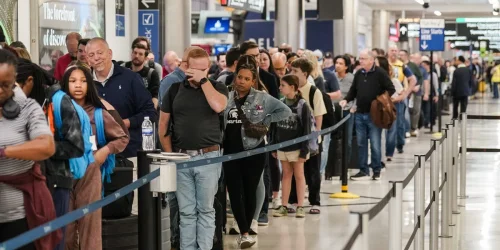
The Transportation Security Administration (TSA) faces a severe staffing shortage that is expected to cause prolonged airport security delays, despite President Donald Trump ordering the agency's workers to be paid again following a partial government shutdown. The funding lapse, which began in mid-February, forced approximately 50,000 TSA officers to work without wages for weeks.
Ha Nguyen McNeill, the TSA's deputy administrator, confirmed that nearly 500 officers have resigned since the shutdown started. This follows more than 1,000 agents quitting during a separate 43-day government closure late last year. The agency warns it takes four to six months to fully train new officers, creating a critical pipeline problem.
'A dire situation' for airport security
In testimony to lawmakers, Deputy Administrator McNeill described a "potential perfect storm of severe staffing shortages and an influx of millions of passengers at our airports." Adam Stahl, the TSA chief of staff, echoed this, stating the situation will "get worse before it gets better" and that recruiting remains a "challenge" due to perceived job insecurity.
The staffing crisis comes amid broader turbulence for the airline industry, including soaring jet fuel costs linked to the US and Israel's war on Iran. Prices have surged to nearly $200 a barrel, far above the previous $100 average, prompting carriers like Qantas Airways and Air India to raise ticket prices.
Consumer confidence in air travel plummets
A February Ipsos survey reveals growing public anxiety, with almost half of respondents saying they are "losing confidence in the safety of air travel." Less than 30% expressed confidence. The concern is highest among high-income households, a key demographic for airlines.
Analysts suggest multiple factors are at play, including the war's impact on international routes, rising costs, staff shortages, and recent aviation incidents. These include a fatal January collision near Reagan Washington National Airport and a crash this week involving an Air Canada plane and a fire truck.
Long-term repercussions for key travel periods
The confluence of issues threatens to disrupt travel for major events. TSA officials have indicated that open positions may not be filled in time for the high passenger volumes expected during the FIFA World Cup in June. The military conflict has also forced the closure of key airspace and damaged major oil hubs, including a port in the United Arab Emirates, further complicating global logistics.
The Strait of Hormuz, a vital waterway for 20% of the world's oil supply, remains effectively shut down, underscoring the geopolitical pressures exacerbating the industry's operational and financial strains.