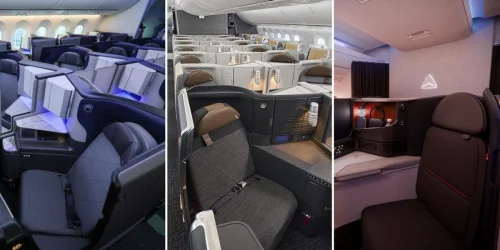
The era of the doorless business class cabin on major US airlines is coming to a close. United Airlines, the last of the "Big Three" US carriers to adopt the feature, will launch its newest Polaris business-class cabin with sliding-door suites this month, cementing an industry-wide shift. What was once a premium differentiator is now standard for carriers competing for lucrative international premium revenue.
Delta Air Lines pioneered doors in US business class in 2017 and announced an even more advanced suite for its future Airbus A350-1000 fleet on Monday. American Airlines joined the trend in June 2025 with its new door-equipped Boeing 787 Flagship Suite. This move towards enclosed privacy pods represents a fundamental change in the long-haul premium travel experience.
The New Standard for Premium Privacy
Virtually every new widebody aircraft delivered to American, Delta, and United will now feature business class seats with sliding doors. Delta's current suites use the Vantage XL seat; its future A350-1000 Delta One Suite will upgrade to the next-generation VantageNOVA platform with slimmer doors for more space. United and American's new Boeing 787s are being delivered with door-equipped suites from manufacturer Elevate Aircraft Seating.
Delta expects 90% of its widebody business seats to have doors by 2030, with retrofits underway for its A330-200 and -300 fleets. American has more than half a dozen new 787s already flying with its Flagship Suite and has 30 total on order. United's first flight with the new door-equipped Polaris cabin is scheduled for April 22 to Singapore, though the doors await certification and will remain locked open initially.
Comparing the Core Cabin Experience
Despite the standardisation on privacy doors, airlines are competing on cabin features. All suites offer approximately six-and-a-half-foot-long beds, angled seats for better window views, personal storage, power ports, wireless charging, and large Bluetooth-capable televisions.
Screen size is a key battleground. Delta's next-generation suite will boast 24-inch screens, up from around 18 inches currently. United's new Polaris screen will be approximately 19 inches, while American's are about 17 inches. United also plans to offer hyperfast Starlink internet on future 787s, while American and Delta use satellite-based providers supporting streaming.
New Frontiers in Premium Amenities
With doors becoming ubiquitous, carriers are introducing new perks to attract high-paying customers. Both United and Delta are adding self-service refreshment areas with snacks and drinks, alongside build-your-own ice cream sundae carts exclusive to business class.
Airlines are also creating new tiers of premium seating. American offers eight "Preferred" seats, which are up to 42% larger with a bigger footwell and include complimentary pyjamas, at no extra fee. United's "Polaris Studio" seats are 25% larger, feature a 27-inch television – billed as the largest of any US carrier – and include an ottoman for in-flight socialising, for a fee of $499 each way.
A Fragmented Fleet and Passenger Advice
While standardisation is the goal, passengers will face a mixed fleet for years. Retrofitting every existing aircraft is not always economical. Delta's older Boeing 767s will retire without doors later this decade. American's older 787s will not receive the new Flagship Suite, though it plans retrofits for its 777 fleet. United is limiting its newest Polaris cabin to new 787 deliveries.
This means the premium experience will still heavily depend on the specific aircraft type. Passengers seeking guaranteed privacy should verify the aircraft model when booking to confirm the availability of a door-equipped suite, as older configurations without doors will remain in service for the foreseeable future.