Senior US government officials, including members of Congress and their top staff, are not legally required to disclose the specific details of their prediction market trades to the public, despite rules mandating the reporting of outside income. This regulatory gap exists as prediction markets, where users bet on the outcome of future events, surge in popularity and scrutiny.
Current federal ethics laws require politicians and high-ranking officials to disclose stock purchases and sales within 30 to 45 days. However, no equivalent law exists for the disclosure of individual contracts traded on prediction markets, platforms that allow betting on events like election results or policy decisions.
Income Reporting Required, But Details Are Scarce
While the specifics of each trade are not disclosed, lawmakers are required to report any source of outside income exceeding $200. This means the public should, in theory, be able to see how much money an official earns from prediction market activity in aggregate, though not what they are betting on.
Kedrick Payne, Vice President and Senior Director of Ethics at the Campaign Legal Center, stated the issue is one of enforcement. "What's missing right now is for the ethics committees to remind people that these disclosure rules apply," Payne told Business Insider.
Some platforms have taken independent action. Kalshi, the largest US-based prediction market, automatically bans members of Congress from trading on its platform. Furthermore, the White House recently warned staffers against trading on prediction markets concerning the Iran conflict, citing ethics guidelines that prohibit using nonpublic information for financial gain.
Legislative Push for Transparency and Proposed Bans
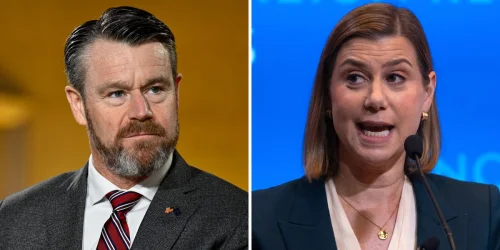
The lack of transparency has prompted legislative action. A bipartisan bill, the Public Integrity in Financial Prediction Markets Act of 2026, was introduced in March by Republican Senator Todd Young of Indiana and Democratic Senator Elissa Slotkin of Michigan.
The proposed legislation would mandate that the President, Vice President, members of Congress, and senior staff in both executive and legislative branches disclose details of any prediction market trade valued over $250. "We think that we're creating the sort of mechanism that the American people would expect," Senator Young told Bloomberg. The bill also prohibits using non-public information for profit, with violations carrying significant fines.
Conversely, other proposals seek outright bans. The "End Prediction Market Corruption Act," introduced by Democratic Senators Jeff Merkley of Oregon and Amy Klobuchar of Minnesota, would prohibit the President, Vice President, and members of Congress from trading on prediction markets entirely.
Potential Pitfalls of Increased Disclosure
Some ethics experts caution that requiring disclosure of individual trades could create new problems. Kedrick Payne, who previously served as Deputy Chief Counsel at the Office of Congressional Ethics, argued that such detailed disclosure may not be "prudent or practical."
He warned that if the public could see a lawmaker's specific prediction market bets, it could lead others to follow suit, artificially inflating the price of that contract and financially benefiting the official who placed the original bet. "It could end up influencing the market in a way that is damaging," Payne said. He suggested that, similar to arguments about stock trading, a blanket ban for lawmakers might be a more straightforward solution.