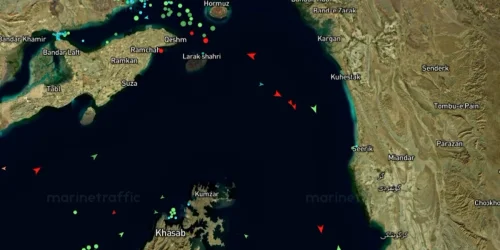
The United States has initiated a naval blockade of the Strait of Hormuz, a critical maritime passage for global oil shipments, causing significant disruption to shipping traffic. The action, which began on April 13, immediately sent shockwaves through financial markets, triggering volatility in stock indices and a sharp rise in crude oil prices.
According to maritime traffic data, vessel movement through the narrow strait appears to have halted. The waterway, located between Iran and Oman, is one of the world's most important oil transit chokepoints, with about one-fifth of global oil consumption passing through it daily.
Immediate Market Reaction
Financial markets experienced pronounced volatility on Saturday, April 13. Major stock indices, including the S&P 500 and the Dow Jones Industrial Average, fluctuated between losses and gains throughout the trading session as investors digested the geopolitical development.
Concurrently, the price of Brent crude oil, the international benchmark, rose significantly. The price increase reflects immediate concerns over potential supply constraints from the Middle East, a region that accounts for nearly half of the world's seaborne oil trade.
Strategic and Economic Context
The Strait of Hormuz is a geographically narrow passage, at its smallest just 21 nautical miles wide, with shipping lanes in either direction only two miles wide. Its closure or disruption has long been considered a major risk to the global economy.
This US military action represents a significant escalation in regional tensions. The strait is the only sea passage from the Persian Gulf to the open ocean, making it an essential route for oil exports from Saudi Arabia, Iraq, the United Arab Emirates, Kuwait, and Qatar.
Box: What is the Strait of Hormuz?
The Strait of Hormuz is a chokepoint between the Persian Gulf and the Gulf of Oman. An estimated 20.5 million barrels of oil per day passed through it in 2023, representing about 21% of global petroleum liquids consumption. Any sustained disruption typically leads to increased oil prices and supply shortages for importing nations.
Global Implications and Next Steps
The blockade's duration and the international response will be critical factors in determining its long-term impact on energy markets and global trade. The United Nations Security Council is expected to convene for an emergency session to discuss the crisis.
Major oil-consuming nations, including members of the International Energy Agency (IEA), may consider activating strategic petroleum reserves to mitigate supply shocks. Shipping companies are already rerouting vessels, which will increase transit times and freight costs significantly.