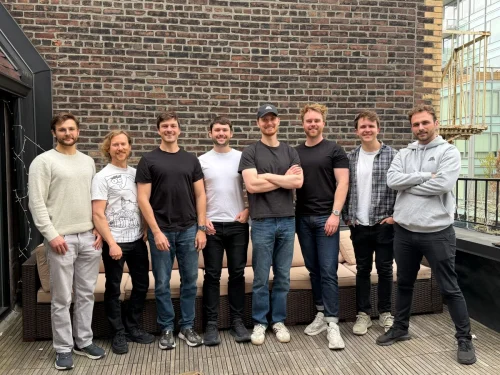
Antioch, a New York-based startup building simulation tools for robot developers, has secured $8.5 million in seed funding. The round, led by venture firms A* and Category Ventures, values the company at $60 million.
The company's objective is to address a critical bottleneck in robotics: the scarcity of real-world data needed to train autonomous systems. By creating detailed virtual replicas of physical environments, Antioch aims to provide a scalable workspace for developers to program and test physical AI agents.
Bridging the Simulation-to-Reality Gap
Antioch's platform allows developers to spin up multiple digital instances of their hardware, connecting them to simulated sensors that mimic real-world data. This enables testing of edge cases, reinforcement learning, and the generation of new training data without the prohibitive cost of building physical testing arenas.
"How can we do the best possible job reducing that gap, to make simulation feel just like the real world from the perspective of your autonomous system?" said Antioch CEO and co-founder Harry Mellsop.
The challenge, known as the "sim-to-real gap," lies in ensuring the physics within the simulation are sufficiently high-fidelity. Antioch builds on models from companies like Nvidia and World Labs, creating domain-specific libraries to enhance realism for its clients.
Backing from Industry Experts
The seed round saw participation from MaC Venture Capital, Abstract, Box Group, and Icehouse Ventures. Antioch was founded in May 2023 by Mellsop and four co-founders with backgrounds in security, intelligence, and AI research from firms like Chainalysis, Google DeepMind, and Meta.
The need for advanced simulation is underscored by major players like Waymo, which uses Google DeepMind's world models to test its self-driving technology. However, Antioch is targeting smaller companies that lack the capital for extensive real-world data collection.
Angel investor Adrian Macneil, founder of robotics data firm Foxglove and former Cruise executive, highlighted the necessity. "Simulation is really important when you’re trying to build a safety case or dealing with very high-accuracy tasks," he said. "It’s not possible to drive enough miles in the real world."
A New Paradigm for Development
Antioch executives compare their product to Cursor, a popular AI-powered software development tool. They envision a future where physical AI systems are primarily developed in software within "two to three years."
Early experiments are already underway. Researcher David Mayo at MIT’s Computer Science and Artificial Intelligence Laboratory is using Antioch's platform to evaluate LLMs by having them design and test robots in simulated contests.
Çağla Kaymaz, a partner at Category Ventures, noted the higher stakes in physical AI compared to purely digital tools. "With software, you can have these bad coding tools, and the risk is generally pretty contained to the digital world. In the physical world, the stakes are much higher."
The Road Ahead
Antioch's current focus is on sensor and perception systems for vehicles, machinery, and drones. While its pitch is geared towards startups, some of its earliest engagements have been with large multinationals investing heavily in robotics.
Closing the sim-to-real gap could enable a data flywheel effect, similar to that used by leaders like Waymo, where each iteration of a model is more capable than the last. For other companies to compete, they will need to either build these simulation capabilities internally or acquire them from specialists like Antioch.