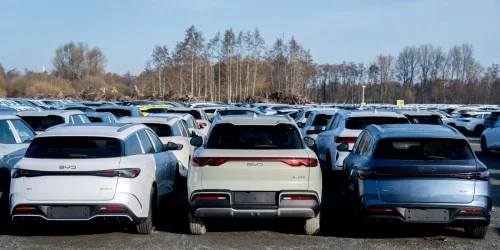
The Chinese electric vehicle manufacturer BYD, which surpassed Tesla as the world's top-selling EV brand in 2025, is accelerating its global push with executives expressing "high confidence" in meeting an overseas sales target of 1.5 million vehicles. The expansion comes as a sharp rise in global fuel prices, driven by the war in Iran, creates new incentives for consumers to switch to electric mobility.
Insiders told Reuters that foreign markets could eventually constitute half of BYD's total car business, signalling a rapid transformation from a domestic powerhouse to a full-line global automaker. The company's broad portfolio, ranging from the affordable Seagull hatchback to the high-performance Yangwang U9 Xtreme sports car, is now reaching dealerships across South America, Central America, Europe, and Australia, with Canadian sales imminent.
Supply Struggles to Meet Surging Demand
In key new markets, demand is reportedly outstripping supply. Dozens of social media users in Australia have reported waiting periods of over a week just to secure a test drive for popular BYD models. This consumer interest is partly driven by significant price advantages; while the average price for a Toyota, Ford, or Hyundai in Australia ranges from AU$44,000 to AU$62,000, the BYD Atto 1 hatchback can be ordered for under AU$25,000.
"A lot of automakers are really worried for good reasons," Adam Bernard, founder of AutoPerspectives and a former General Motors executive, told Business Insider. "BYD is really becoming a full-line automaker. The only thing they don't quite have is the complete global presence yet — but that's just a matter of time."
Technological Edge and Legacy Automaker Anxiety
Concurrent with its geographic expansion, BYD continues to advance its core technology. This month, the company unveiled its new Blade 2.0 battery, which it claims can charge from 10% to 70% in just five minutes and provide a driving range exceeding 620 miles. These charging speeds are three times faster than any electric vehicle currently available on the US market.
Legacy automaker executives have publicly acknowledged the competitive threat. In June, Ford CEO Jim Farley stated Chinese EVs were "far superior" to US options, a sentiment he reiterated in November, saying he was "humbled" by engineering analyses of Chinese rivals. Toyota's CEO, Koji Sato, offered a starker warning to suppliers: "Unless things change, we will not survive. Right now, we in the automotive industry are battling for our very survival."
Market Barriers and Future Challenges
Despite the momentum, significant hurdles remain. The US market remains largely inaccessible to BYD and other Chinese EV makers due to steep tariffs and regulatory barriers, including restrictions on software updates. Furthermore, industry analysts point to challenges with long-term profitability, shifting government incentives globally, and potential consumer backlash.
Adam Bernard also cautioned that while high fuel prices boost EV interest, they are an unstable long-term demand driver. "It can become short attention span theater," he said. "Gas prices move, and behavior follows — but not always for long."
BYD's global ambitions now hinge on navigating these complexities while capitalising on a favourable market shift. The company did not immediately respond to a request for comment from Business Insider regarding its updated sales forecasts and expansion strategy.