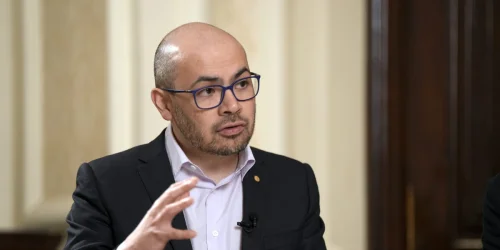
Google DeepMind CEO Demis Hassabis has stated that adopting a startup-like approach was crucial for the AI lab's accelerated progress over the past two to three years. Speaking on the "20VC" podcast released on Tuesday, Hassabis explained how a significant internal reorganisation allowed Google to consolidate its AI talent and computational resources.
The executive detailed that the 2023 merger of DeepMind with Google's Brain unit was pivotal. This consolidation created a single, focused entity, Google DeepMind, which now develops flagship AI tools like Gemini and Nano Banana. "We've basically helped put together all the talent from around the company, sort of pushing in one direction," Hassabis said.
Consolidating Resources for Frontier Models
Hassabis emphasised that combining resources, particularly compute power—a major bottleneck in AI research—was a key strategic move. This unified effort enabled Google to concentrate on building its largest and most advanced AI models, rather than maintaining multiple competing projects internally. "A lot of it was assembling together all the ingredients we already had and then kind of pushing with relentless sort of focus and pace," he stated.
Acting almost like a startup, really, to get back to the frontier and be ahead in many areas, Hassabis added, characterising the lab's operational shift. He co-founded DeepMind in 2010, which was subsequently acquired by Google in 2014 before the 2023 merger.
A Legacy of Foundational Breakthroughs
The CEO made a bold claim about the lab's historical contribution to the field, asserting, "I would say about 90% of the breakthroughs that underpin the modern AI industry were done by either Google Brain, Google Research, or DeepMind." Google DeepMind now competes directly with other leading "frontier" AI labs, including OpenAI, Anthropic, and Microsoft AI.
The concept of large corporations operating with startup agility is not new in the tech industry. Amazon CEO Andy Jassy expressed a similar sentiment in a 2023 letter to shareholders, stating his desire for the tech giant to function as the "world's biggest startup." He argued that speed is critical and that moving fast does not preclude maintaining high standards.
The Enduring Startup Ethos in Tech
This philosophy echoes the late Apple co-founder Steve Jobs, who famously described Apple as being organised like a startup, with all teams aligned on common goals. "We're the biggest startup on the planet," Jobs declared at a 2010 conference, highlighting a long-standing ideal in Silicon Valley culture where scale and agility are not seen as mutually exclusive.
For Google DeepMind, embracing this lean, focused mentality appears to have been a decisive factor in regaining a competitive edge and advancing its position at the cutting edge of artificial intelligence research and development.