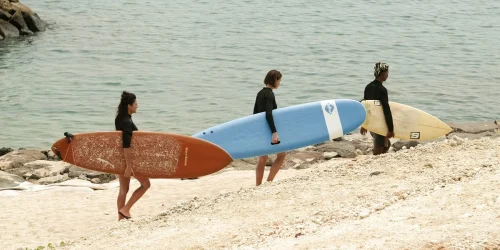
Picture this: you're choking on seawater, a surfboard smacks you in the face, and all you can think is, "Please, Singapore Airlines, take me home." This was the humbling reality for one 24-year-old journalist in Bali, and it's exactly what a generation is now paying for.
Why? Because Gen Z is staging a quiet rebellion. Tired of Zoom calls, online dating, and the endless chore of coordinating group trips, they are flocking to expensive, physically demanding surf camps—alone. It’s not just a holiday; it’s a statement of intent for how they live, spend, and find connection.
The Solo Surge: Why Your Friends Are No Longer Invited
"Most of my friends are in relationships. I was sick of waiting for them," said Gina Jaguttis, 26, who travelled solo from Munich. Her story echoed around the campfire, from a Singapore finance whizz who’d waited years to an Australian woman confronting her own backyard shame. The common thread? A desperate craving for a challenge and a ready-made community they couldn’t find at home.
This isn't a niche trend. Research from Bank of America reveals a seismic spending shift: while older generations splash out at bars, Gen Z and millennials are pumping money into gyms, golf, and yes, surf camps. Their travel spending is growing at a "much higher rate" than the overall population.
"Tomorrow's Not Promised": The Psychology Behind The Paddle-Out
According to Gen Z researcher Meghan Grace, this is about "intentional investment." Burned out and financially pinched by AI job fears and soaring costs, young people are ditching traditional milestones. "They don't want to wait because tomorrow's not promised," Grace states. Instead of saving for a house, they're investing in experiences that offer what their digital lives lack: raw, real, human connection.
The data backs it up. A BCG report crowns millennials and Gen Z as "the most influential travelers globally," noting they plan more trips and are "the most likely to travel on their own" to connect with like-minded people.
The Staggering Price Tag of Purpose
This new purpose doesn't come cheap. Off The Grid, a social travel company, sells out 10-day trips costing over **$2,000 per person** (flights not included). The Wavehouse surf camp in Bali, where a 4-star hotel averages $66 a night, charges over $150 a day in peak season. Yet, it runs at full capacity year-round.
"Some of them don't really need instructors anymore," said Wavehouse's general manager, Alexander Gontar. "They just go back for that life... To come hang out with like-minded people." It’s a lifestyle subscription, not a one-off holiday.
Finding "Flow State" and Forgetting the Hustle
The real payoff isn't just a tan. For 22-year-old Chloe Lee, on her fifth trip in two years, surfing is a mental reset. "I feel disconnected from all the hustle and bustle," she said, even though taking time off her commission-based job means losing pay. The community sticks, too—she's met clients and pickleball partners through the camp.
For our journalist, the brutal paddle-outs induced a rare "flow state"—a total mental immersion where work anxiety vanished. This was starkly different from a passive group trip weeks earlier, which only provided more time to dwell on a quarter-life crisis.
This Is Just The Beginning
The impact is clear: this generation is permanently rewiring the travel industry and their own lives. They are choosing hobbies that demand physical investment and offer built-in tribes over traditional social rituals. As one camper plotted her return between pickleball games, the message was clear: they’re not waiting for permission or partners anymore. They are building their lives around passion, and the travel world is scrambling to keep up.