What happens when the world's most famous AI company starts to feel the ground shift beneath its feet? While headlines chase its rivalry with Anthropic, a pair of quiet, almost secretive acquisitions tell a far more revealing story. This isn't about growth; it's about survival.
OpenAI, the creator of ChatGPT, has just snapped up two small startups: Hiro, a personal finance app, and TBPN, a new media talk show. On the surface, they look like classic talent grabs. But insiders and industry watchers see something far more urgent. **These deals are a desperate attempt to solve two existential crises threatening to unravel the company.**
The Hail Mary Pass for a Paying Customer
Let's talk about Hiro first. This personal finance startup launched just two years ago and is already shutting down its service. For OpenAI, it's a pure acqui-hire. But why this team? The founder is a serial entrepreneur known for building consumer apps—something OpenAI desperately lacks.
"ChatGPT is a phenomenon, but is it a business?" asks TechCrunch's Sean O'Kane. The brutal truth is that the **chatbot, for all its hype, might never make enough money to justify its astronomical costs.** Meanwhile, the real goldmine—enterprise clients and developers—is being stormed by competitors. Bringing in the Hiro team is a bet that this founder can invent "something else that may have more hooks than just a chatbot, and maybe something worth paying more for."
A Crisis of Image and a Media Lifeline
Then there's TBPN. OpenAI bought a talk show. In the middle of a refocus on enterprise software, someone greenlit acquiring a media company. The official line is that the show will retain "editorial independence," but seasoned media observers are deeply skeptical.
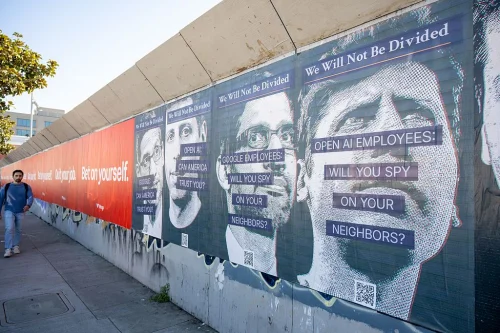
"It's not an incantation that just works," O'Kane warns. The real motive is glaringly obvious. **OpenAI's public image is in tatters.** With damning reports—like a recent investigation from The New Yorker—dropping at an inconvenient pace, the company is scrambling to control the narrative. This acquisition isn't about content; it's a shield, an attempt to "better shape its image in the public eye."
The Shadow in the Room: Anthropic
To understand the panic, you must look at the competition. While OpenAI makes splashy consumer moves, Anthropic has been quietly locking down the enterprise sector with its Claude AI. At a recent major tech conference, the buzz wasn't about ChatGPT. "They were all about Claude Code," reports TechCrunch.
This is the nightmare scenario. The area with the most money—the path to a sustainable business—is slipping away. **OpenAI isn't just competing with Anthropic; it's obsessed with it,** reports suggest, watching its rival carve out the lucrative future it needs for itself.
So, what's next? These two small deals are a signal flare. They reveal a company at a crossroads, trying to buy its way out of a product problem and a perception crisis simultaneously. The race is no longer just about who has the smartest AI. It's about who can build a real business and win back trust—and right now, OpenAI is playing catch-up on both fronts.