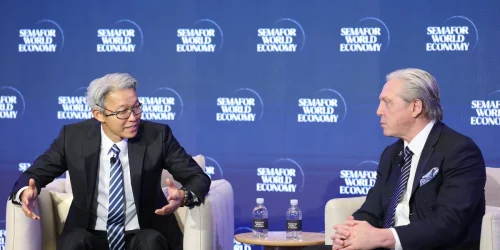
The CEO of the global job-search platform Indeed has stated that the ageing of the labour force in developed nations is a more significant challenge than the impact of artificial intelligence. Hisayuki "Deko" Idekoba made the remarks on Wednesday during Semafor's World Economy Summit, highlighting a looming demographic crisis.
Idekoba, who is also CEO of Recruit Holdings, the parent company of Indeed and Glassdoor, argued that Western countries have failed to grasp the reality of a shrinking pool of workers. "Actually, what is happening in all developed countries, including European countries and the US, what is happening is a big demographic change, an ageing labour market," he said.
Shrinking Workforce, Growing Shortages
According to Indeed's research, the United States will have 20 million fewer workers over the next 50 years, a decrease of approximately 5%. Idekoba estimated that 80% of this decline will be due to an ageing population, with only 20% attributable to AI-related job displacement. "That's a way bigger impact than AI impact today," he stated.
This demographic shift is occurring against a backdrop of existing unfilled positions in critical, high-skilled sectors. Idekoba pointed to shortages in construction, plumbing, healthcare, and electrical work. "There are so many open positions... such fundamentally important jobs, but we don't have a good pipeline," he explained.
No Untapped Reserve to Follow Japan's Lead
Idekoba contrasted the situation in the US and Europe with that of his native Japan. While Japan has faced a low birth rate for decades, it managed to stabilise its labour force by significantly increasing female participation, tapping into a previously underutilised demographic.
"In the US, it's happening in Germany, the UK, all of the developed countries, it's gonna be faster," Idekoba warned. He noted that Western nations lack a similar reserve of untapped workers to compensate for retiring Baby Boomers, leading to a more acute crisis.
Immediate Consequences for Consumers
The CEO warned that these labour shortages will quickly translate into tangible problems for the public. He gave a stark example of the current reality: "I don't want to wait two months when I find the water leaking. But that's happening now in the US."
The comments underscore a growing concern among economists and business leaders that demographic trends, rather than technological disruption, may be the primary driver of labour market strain and economic friction in the coming decades.