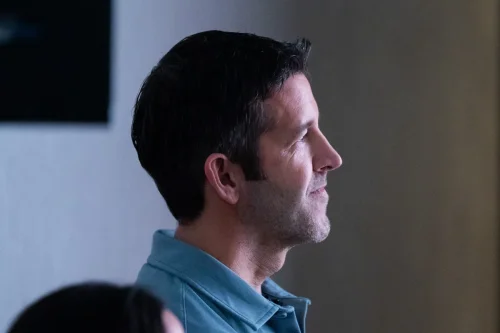
Imagine stepping into the shoes of one of the world's most powerful executives. The prestige is immense, the wealth staggering—but so is the sheer weight of the problems landing on your desk from day one. This is the stark reality for John Ternus, the man chosen to succeed the legendary Tim Cook at Apple's helm.
Cook's 15-year reign saw Apple's value soar to a dizzying $4 trillion, lining his own pockets with an estimated $3 billion fortune. Yet, as he passes the baton, he isn't just handing over the keys to a kingdom. He's bequeathing a legacy defined by relentless battles—fights that Ternus must now finish.
The Inheritance: A CEO's Battlefield Laid Bare
Ternus doesn't just get the corner office. He inherits every single one of Cook's unfinished wars. The first is an identity crisis at the company's core: Apple's fierce stance on user privacy, cemented during a tense 2016 standoff with the FBI over encrypting a terrorist's iPhone. That principled fight defined the brand but guaranteed years of global government tension Ternus must now navigate.
Then there's the cash cow under direct assault. The App Store, a profit engine built on taking up to a 30% cut from developers, is besieged by antitrust lawsuits. Epic Games' landmark case forced Apple to allow links to external payments, a ruling upheld in late 2025 that Apple is still fighting all the way to the Supreme Court. But that's just one front.
A Global Legal Onslaught and a $38 Billion Threat
The U.S. Department of Justice accuses Apple of illegally monopolising the smartphone market. A federal judge has let that case proceed, meaning it could grind on for years. And in a stunning move this week, Apple revealed it faces a potential $38 billion fine in India for app market abuses—a staggering sum even for a $4 trillion giant, complicated by Apple's relatively modest 9% market share there.
Perhaps the most delicate tightrope is China. Cook made Apple profoundly dependent on Chinese manufacturing while making painful concessions to stay in the market, like removing VPN apps and handing iCloud data to state servers. His personal rapport with figures like Donald Trump—who called Cook "an incredible guy!" upon his retirement—helped insulate Apple. Now, Ternus must manage this geopolitical minefield, albeit with Cook watching closely as executive chairman.
The AI Problem: Apple's Greatest Weakness?
But all these inherited fights may pale next to the one challenge where Apple is playing catch-up: Artificial Intelligence. The company's AI chief has just left following delays to a new Siri. Instead of leading, Apple is relying on deals with Google's Gemini and OpenAI's ChatGPT to power its "Apple Intelligence."
As analyst Bob O'Donnell notes, Ternus's biggest task will be "getting a better AI story... that relies more on Apple’s own capabilities." In an era where AI agents threaten to make the App Store itself obsolete, this isn't just a product gap—it's an existential threat to the entire business model Cook built.
John Ternus isn't just taking a new job. He's assuming command in the middle of a multifront war, with the very future of the world's most valuable company hanging in the balance. The age of simply managing complex relationships is over. The new CEO must now prove Apple can still invent its own future.