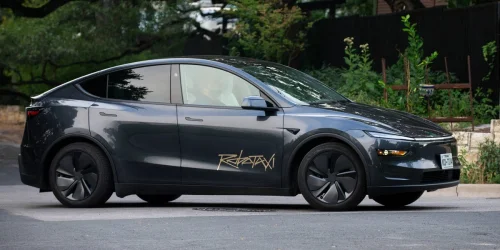
Imagine you're in a car with no driver, cruising down a highway at 90 miles per hour. Suddenly, the vehicle starts to slow down, as if it's about to pull over into the speeding traffic. This wasn't a nightmare—it was the reality for one of the first passengers in Tesla's new robotaxi service in Dallas.
Chris Ramos, a 34-year-old supervisor, told Business Insider he was "excited to be on that frontier" of autonomous tech. But his inaugural ride last Saturday quickly turned from futuristic fantasy to a white-knuckle experience that exposes the raw, unpolished state of driverless cars.
The Highway Horror: "You Don't Pull Over on the Highway"
After a two-hour wait and confusion over whether the service was even live, Ramos's robotaxi journey began smoothly in the city. The trouble started when the car missed an exit and veered onto a high-speed highway. "Traffic was going at 80 to 90 miles per hour," Ramos said.
The car initially accelerated to keep pace. Then, without warning, it began to slow down, behaving as if it was preparing to stop on the shoulder. "There are cars flying by us. You don't pull over on the highway unless it's like a super emergency," Ramos recounted, describing the moment he felt truly unsafe.
A Bumpy Ride Through a Glitchy Frontier
According to Ramos, a Tesla representative remotely intervened, keeping the car in the slow lane until it could exit. But the glitches were far from over. The vehicle then missed its final destination, took him to the wrong location, and got stuck circling a hotel five times.
"I went around that hotel about five times," he said. "In the same loop, going over the same speed bumps." At one point, the system tried to end his trip 2.6 miles from where he needed to be.
The Verdict: Fun for Risk-Lovers, Not for Grandma
The 11-mile, 54-minute trip cost around $18. Ramos, who has also used Waymo in Dallas, gave his final assessment: it's a fun trip for the adventurous, but he would not recommend it to his grandmother.
His experience clashes with online claims of flawless performance. "I'll see people post on X saying everything is flawless, there are no mistakes," Ramos said. "I wanted to see if I could find any flaws in the system." Despite the hiccups, his faith in the technology's future remains unshaken. "I do think the future is autonomous," he stated.
Tesla did not immediately respond to a request for comment on the incident. As robotaxis roll out, Ramos's story serves as a stark reminder: the road to a driverless future is paved with unexpected, and sometimes alarming, detours.