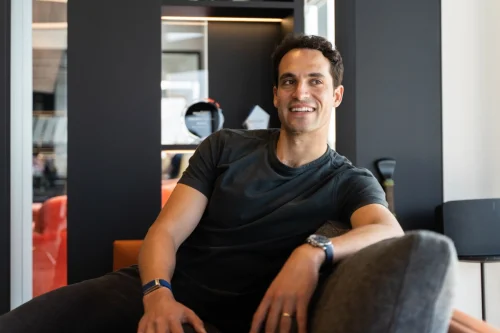
Whoop, the Boston-based health wearable company, is executing a strategic pivot from a performance tool for elite athletes to a continuous health monitor aimed at the general public. Founded by Will Ahmed in 2012, the company has built its reputation on endorsements from top performers like LeBron James and Michael Phelps, but now seeks to expand its user base with medically cleared features and a partnership with Quest Diagnostics.
The subscription-based service, costing between $200 and $360 annually, includes the hardware—a screenless band worn on the wrist, bicep, or torso—and tracks metrics like sleep, recovery, and heart rate variability. The company reported over 100% revenue growth last year and achieved cash-flow positive status, with 83% of monthly active users opening the app daily.
From Performance to Prevention
The core of Whoop's new strategy is the development of features with potential life-saving applications. The company has launched an FDA-cleared electrocardiogram (ECG) monitor and an atrial fibrillation detection feature, which identifies an irregular heartbeat linked to increased stroke risk.
A controversial "blood pressure insights" feature prompted a warning letter from the U.S. Food and Drug Administration (FDA) in the summer of 2025, with regulators arguing it constituted medical diagnosis. Whoop contested the FDA's authority and continued development.
Its partnership with Quest Diagnostics, announced in late 2025, allows members to take blood tests at over 2,000 U.S. locations and upload results to the Whoop app for clinician review alongside their wearable data. A subsequent feature, "Health Span," which calculates biological age, became the company's most popular offering after its May 2025 launch.
Competitive Landscape and Market Expansion
Whoop faces direct competition from Oura, the Finnish maker of a smart ring. Both companies are targeting women as their fastest-growing demographic and announced blood-testing partnerships within a day of each other last autumn. Oura operates on a different model, selling its ring for around $350 with a $70 annual platform fee, and reports customer retention in the "high 80s" percentage after 12 months.
While Ahmed states Whoop's user base still skews male, the business is now roughly evenly split between the United States and international markets, with formal shipping to 60 countries. The company employs approximately 750 people and is in the process of hiring 600 more.
Organic Advocacy and Strategic Alliances
Whoop has cultivated organic adoption among high-profile athletes, a point of pride for the company. An incident at the 2026 Australian Open saw tournament officials order players, including Carlos Alcaraz, to remove their Whoop bands mid-competition, despite International Tennis Federation approval. The players' refusal generated significant media attention.
Ahmed emphasises a company policy against giving athletes equity for endorsements, relying on product value alone. Formal partnerships, such as those with Ferrari and the PGA Tour, are designed for brand exposure to aligned audiences.
Founder's Vision and Industry Context
Will Ahmed, 36, started developing Whoop's technology while studying at Harvard, aiming to solve the problem of overtraining. He describes entrepreneurship as "a very painful experience" that requires obsession with solving a problem rather than the idea of being a founder.
The wearable industry is watching both companies closely. Oura is widely reported to be exploring an initial public offering (IPO). If it goes public first, it would set financial benchmarks against which Whoop would be measured. Ahmed remained circumspect on IPO plans, stating the focus is on "building great technology and growing our business."