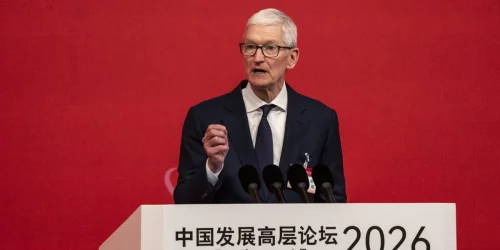
Imagine being told your company is 90 days from bankruptcy. That was Apple's reality in 1997. Fast forward to today, and its survival is inextricably linked to a single, colossal bet made by Tim Cook. This isn't just about cheap manufacturing; it's about a strategic masterstroke that bound the world's most valuable company to the world's most complex market.
Cook's defining legacy, as he steps into the role of executive chairman, is clear: he made China the indispensable backbone of Apple. But how did he pull it off? And what was the staggering price of admission that secured Apple's throne?
The Manufacturing Gambit That Saved Apple
When Cook joined in 1998, his radical call was to shift production to China. It wasn't just about cost. It was about speed and scale that no one else could match. The fateful meeting with Foxconn's Terry Gou around 2000 set the stage, turning the Taiwanese manufacturer into the engine room for the iPod and, crucially, the world-changing iPhone.
This move perfectly aligned with China's own ambition to move up the value chain. The payoff was monumental: by the iPhone era, Apple could launch globally at a pace that left competitors in the dust.
More Than a Factory: Conquering a Billion Consumers
Cook's genius was seeing China not just as a factory floor, but as a critical consumer kingdom. The real breakthrough came in 2013 with a deal for the ages. Apple partnered with China Mobile, then the planet's largest carrier, unlocking the iPhone for hundreds of millions of new customers.
"We see this as bringing the world's best smartphone to the very largest and now the fastest network in China," Cook declared in 2014. Through savvy carrier and reseller deals, Apple pushed beyond major cities, eventually topping China's smartphone market with a 22% share last year.
The $275 Billion Secret to Walking the Tightrope
To thrive in China, Cook had to perform a dizzying political ballet. In Washington, he lobbied fiercely against tariffs, framing Apple's success as vital to the US economy. He personally persuaded President Trump, who later admitted Cook made a "good case," leading to tariff exemptions that protected Apple's supply chain.
But the real revelation is what it took to keep Beijing happy. In 2021, Cook signed a secretive agreement with Chinese officials worth approximately $275 billion. This monumental deal, aimed at easing regulatory pressure, committed Apple to massive investments in retail, R&D centres, and green energy projects. It was the ultimate insurance policy.
Cook didn't stop there. He invested $1 billion in Didi Chuxing to "learn a lot about the Chinese market," and as recently as March 2025, unveiled a new $101 million energy fund during a visit. The message was unequivocal: Apple's future is invested in China.
Cook's successor, John Ternus, now inherits this profound duality. Apple's spectacular growth is powered by China, yet this deep entanglement is its greatest strategic vulnerability. The company's fate is now a permanent story of navigating the tensions between two superpowers—a tightrope walk engineered by Tim Cook, with a quarter-trillion-dollar safety net.